
World of Anterra Exploration Guide: Quests, NPCs & Hidden Paths
Explore World of Anterra's announced quests, NPC routines, hidden paths, breakables, and water mechanics in this developer-preview guide.
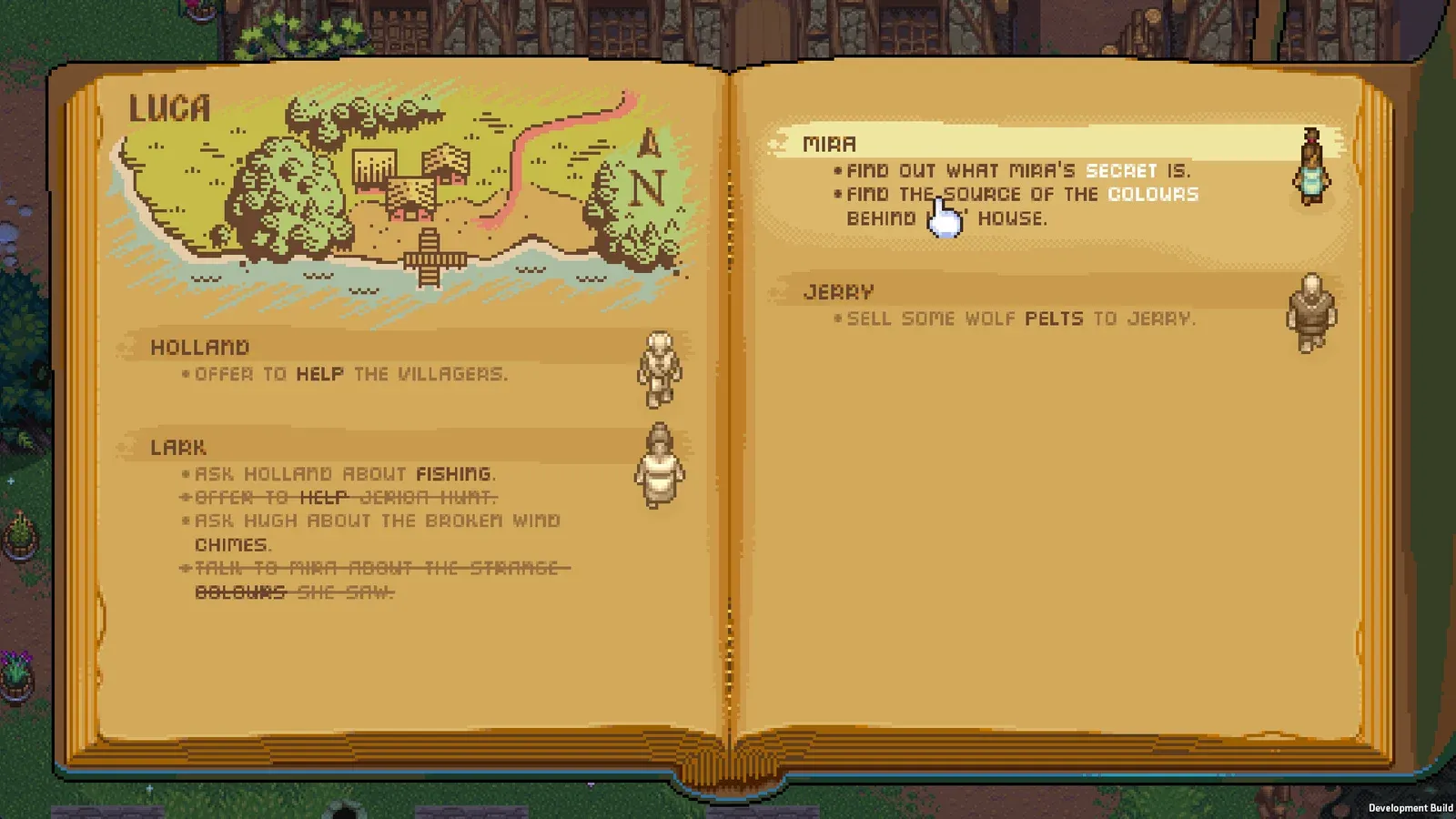
Start With What the Exploration Previews Confirm
A conversation, an overgrown passage, or an unfamiliar shoreline could give you a reason to change direction in Anterra. This World of Anterra exploration guide explains the announced connections between those discoveries so you know what deserves attention. Use this guide to understand the developer’s previews while keeping expectations grounded in what has actually been described.

World of Anterra Trailer 2 — "Let them cook!" · 81monkeys
Official development trailer used as a general visual reference. It is not a keyword-specific tutorial, a device benchmark, or proof that a playable build has released.
As of October 27, 2026, the official World of Anterra Steam listing shows the game as unavailable on Steam, with a planned release year of 2026 and no specific month or day. The advice below interprets development material; it does not come from testing a finished build.
The announced world includes continents, oceans, mountains, caves, and dungeons. Its exploration systems also reach into smaller spaces: houses, crypts, containers, books, and objects that can conceal something worth investigating.
That makes attention more useful than a predetermined route at this stage. The sources support an approach built around asking questions, examining surroundings, and recognizing environmental interactions. They do not provide enough information for verified coordinates, an optimal opening itinerary, or a complete treasure map.
Follow Questions, Books, and NPC Routines
Conversation deserves a central place in a this guide. The developer describes a nonlinear story with branching quests, alongside dialogue that lets you type your own questions. Exploration therefore includes gathering information from people as well as moving through locations.
The official game overview also describes NPCs working, socializing, eating, and pursuing hobbies. These routines give you another reason to observe a settlement before assuming that one visit tells you everything about it.
| Information source | Announced feature | Useful exploration approach |
|---|---|---|
| Conversations | Players can enter their own questions | Follow up on subjects that interest you without assuming every question has a custom response |
| Books | Reading helps uncover the world’s history and mysteries | Note references to magic and ancient races |
| NPC routines | Characters participate in everyday activities | Pay attention to what people are doing when you encounter them |
| Nonlinear quests | Stories can develop along divergent paths | Treat conversations and detours as opportunities to investigate |
Books are especially relevant because the Steam description explicitly connects reading with learning about Anterra. A practical habit would be to keep personal notes on recurring subjects. Those notes could help organize your investigation without relying on an unconfirmed journal or automatic clue-tracking feature.
Typed dialogue also needs realistic expectations. The ability to enter questions does not establish unlimited conversation, universal knowledge among NPCs, or a guaranteed answer to any wording. The reviewed material does not explain how question recognition works.
Likewise, daily routines suggest that observing people at different moments may be worthwhile, but exact schedules are unavailable. There is no supported timetable showing when a particular character leaves home, starts work, or becomes available for a quest.
Approach a settlement as somewhere to investigate over time. Read, talk, and watch for connections, while allowing the game’s actual responses to determine your next step. The previews establish freedom to pursue different paths without identifying a single correct conversation order.
Check Containers and Clear Promising Obstacles
The practical rule in this guide is to examine an apparent dead end before abandoning it. Developer previews specifically connect breakable objects and obstructing vegetation with hidden discoveries, including paths and cave entrances.
The official breakables and non-combat mechanics preview describes several interactions that support this approach. These are examples of what the systems can do, rather than promises about every object of the same type.
| Object or obstruction | Developer-described possibility | What to investigate |
|---|---|---|
| Vases and baskets | Breaking them can reveal loot, food, or surprises | Whether the object responds to an attack and what appears afterward |
| Thorn bushes and vines | Clearing them can expose concealed access | The space behind the vegetation |
| Spiderwebs | Removing them can reveal paths, containers, or cave entrances | Whether the web obscures something reachable |
| Containers | Secrets can be hidden inside | Containers encountered while searching interiors and other locations |
The important distinction is between a possible discovery and a guaranteed reward. A vase is worth noticing because the developer has shown breakable objects serving exploration. The sources do not establish fixed contents, drop probabilities, or a rule that every breakable contains something valuable.
After clearing an obstruction, inspect the newly exposed area. The reward described in the preview may be access rather than an item: another path, an entrance, or a container that was previously concealed. Simply checking for dropped loot could miss that broader purpose.
The Steam description also names crypts, caves, and houses as places to investigate. That supports looking closely at interiors and enclosed spaces, although the reviewed material does not explain access restrictions or the consequences of entering particular buildings.
A useful search habit is to connect actions with observation: notice an obstruction, interact where supported, and check what changed. No named dungeon route or exhaustive room checklist is needed to understand that announced relationship.
Use Weapons Beyond Formal Combat
Weapons earn a place in this guide because their uses extend into ordinary movement through the world. The developer describes swinging swords and firing arrows outside combat, with applications involving distractions, surprise attacks, hunting, and clearing obstacles.
| Weapon use | Supported example | Practical consideration |
|---|---|---|
| Distraction | An arrow can distract a creature | Observe the creature’s response before deciding what to do next |
| Surprise attack | An unsuspecting creature can be attacked before it notices you | Avoid being spotted during the approach |
| Hunting | Animals can provide meat for ration packs | Some targets may require sneaking or chasing |
| Environmental interaction | Attacks can clear vegetation or break objects | Check whether the action exposes access or contents |
For approaching creatures, the preview supports paying attention before initiating an encounter. It specifically describes gaining an advantage by attacking an unaware target and warns that being detected can interfere with that approach. Exact detection distances and damage bonuses remain unspecified.
Distraction is a separate possibility worth recognizing. Shooting an arrow is described as a way to divert a creature’s attention, but the sources do not establish how long that lasts or which creatures respond. A reliable distraction route cannot be mapped from these examples alone.
Hunting also connects exploration with supplies. The developer says meat can fill ration packs and notes that some creatures do not enter combat with the player. Pursuing those animals may involve getting close unnoticed or chasing them down.
These examples show why an encounter should begin with observation. The terrain, the creature’s awareness, and the purpose of your action all deserve consideration. The previews support several approaches without supplying enough detail to rank weapons or prescribe a universal opening move.
Read Water Depth and Changing Conditions
Water deserves its own part of this guide because it has stated effects on movement and access to resources. The developer describes both shallow and deep environments, along with fishing, sailing, and creatures associated with water.
The official Way of Water feature preview distinguishes mechanical effects from visual details. Depth affects movement, while transparency, reflections, and weather change how the surroundings appear.
| Water feature | What the preview confirms | Exploration implication |
|---|---|---|
| Depth | Movement slows according to water depth, with an exception for aquatic creatures | Consider movement conditions before approaching creatures in water |
| Water type and clarity | Visibility varies with depth and the kind of water | Expect different underwater visibility in clear water and bog water |
| Aquatic environments | Certain resources, creatures, and enemies occur only in or near water | Shorelines and water environments offer distinct things to investigate |
| Weather and time | Rain, daylight, clouds, and moonlight affect appearance | Expect the same body of water to look different under changing conditions |
The most directly useful detail is the movement difference between ordinary and aquatic creatures. Entering deeper water can slow movement, while water creatures are described as exempt from that slowdown. That gives you a reason to assess a watery approach before engaging something that belongs there.
Visibility also requires care. Water clarity depends on both depth and type, so appearance alone should not be treated as a precise depth measurement. The preview supplies no numerical thresholds for safe passage or movement penalties.
Fishing and sailing are announced, but their operating details are absent from the reviewed material. There are no verified fishing locations, bait requirements, boat acquisition steps, or sailing routes here. The supported takeaway is that water participates in several exploration activities.
Day and night also affect the broader journey. The Steam description mentions setting up camp to sleep through darkness and resting in friendly taverns. Camping therefore offers an announced way to pass the night, although recovery amounts and other detailed rest rules are unspecified.
Use this guide as a framework for noticing connections: water can affect movement, vegetation can conceal access, and a book can introduce a subject worth investigating. The value lies in recognizing those opportunities while leaving exact solutions open until the game provides them.
FAQ
Is this World of Anterra exploration guide based on a released build?
It is based on official descriptions and development previews. As of October 27, 2026, the Steam store page lists World of Anterra as unavailable on Steam, with a planned 2026 release and no specific release day. These sources do not support a tested walkthrough or optimized route.
Does the itch.io download include a playable demo?
the 81monkeys itch.io listing identifies the available download as “WoA Teaser Assets Bundle 1.zip,” listed at 3.4 MB. It contains artwork-related material, including concept art, an avatar, and wallpapers. That download is an artwork bundle rather than a playable demo or the full game.
Can breaking objects reveal hidden paths and loot?
Yes. The developer describes vases and baskets that can reveal items or surprises, plus vegetation and spiderwebs that can conceal paths, containers, or cave entrances. These examples establish possible interactions. They do not guarantee a reward from every object or confirm fixed loot locations.
Can you type questions to NPCs?
Yes, typed questions are part of the announced conversational dialogue system. The reviewed sources do not explain its full vocabulary, response coverage, or exact relationship with individual quest branches. Use the feature to investigate subjects while judging its possibilities through the responses the game actually provides.
What should I read next?
For related preparation, read beginner interactions, combat systems, and crafting and ration pouches. Each page separates developer plans from details still awaiting confirmation.
Related Articles
guides
World of Anterra Beginner Guide: Tutorials & First Interactions
Prepare for World of Anterra with official previews of contextual tutorials, interaction icons, harvesting, reading, and the torch sequence.
guides
World of Anterra Crafting & Rations: Announced Systems
Learn how World of Anterra plans personal ration pouches, food distribution, buff meals and crafted barrel fuses, using official developer previews.
guides
World of Anterra Character Creation: Customization & Visible Gear
Explore World of Anterra character creation, including visible gear, animation layering, palette swapping, and details still unconfirmed.
Was this helpful?
Thanks for the feedback!